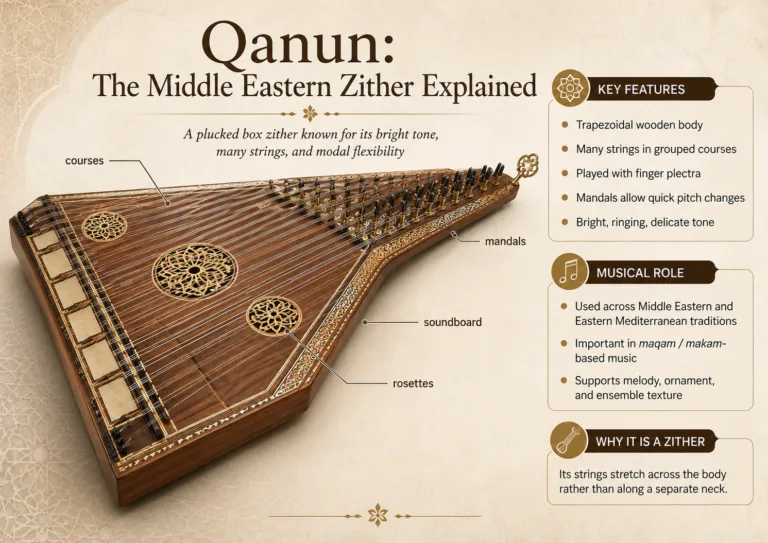
• Qanun: The Middle Eastern Zither Explained

    The qanun is a plucked box zither: a flat, usually trapezoidal instrument with many strings stretched across a shallow wooden body. It belongs to the wider zither family, but it is not simply a “Middle Eastern guitar,” a small harp, or a dulcimer. Its identity comes from three things working together: courses of strings, a…
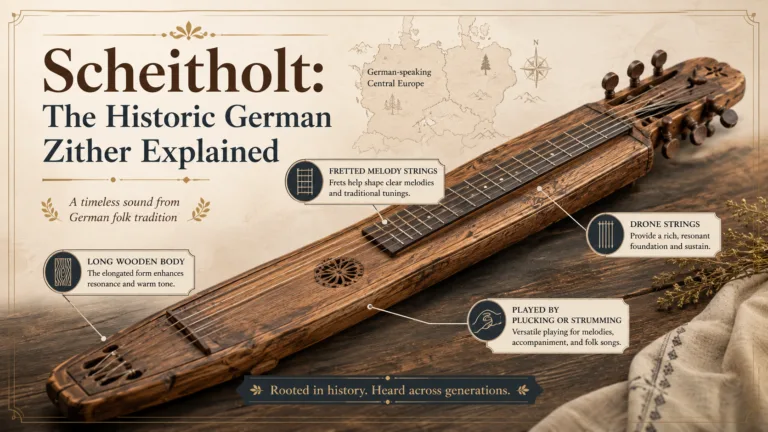
  • Scheitholt: The Historic German Zither Explained

    The scheitholt is a historic German fretted zither: a narrow wooden instrument with strings stretched along the length of its body, some used for melody and others left to sound as drones. It sits inside the wider zither family[1], but it should not be confused with the later concert zither, the Appalachian dulcimer, or the…

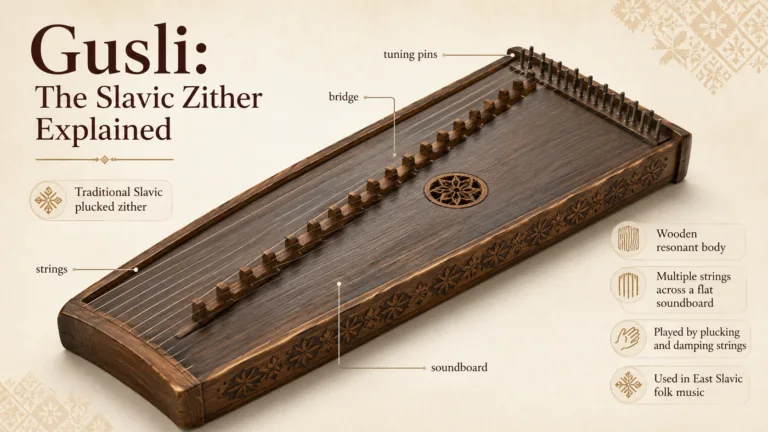
  • Gusli: The Slavic Zither Explained

    The gusli is a Slavic plucked zither[1]: a string instrument whose strings lie across a wooden body rather than running along a neck. In organological language, it is a chordophone[2], but the zither label is more useful for understanding how it works. The player does not stop strings against a fingerboard like a violin or…

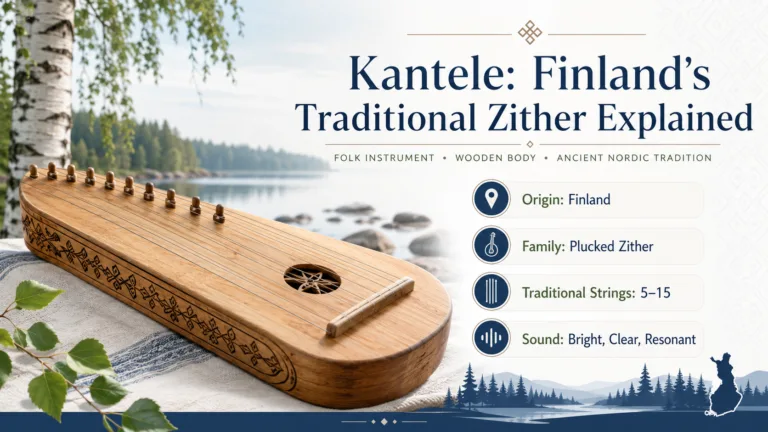
  • Kantele: Finland’s Traditional Zither Explained

    The kantele is a Finnish and Karelian plucked zither[1] with a clear identity of its own: strings run across a wooden body, each string gives a set pitch, and the player shapes melody, chord, and ringing sustain directly with the fingers. It belongs to the wider chordophone[2] family and, more narrowly, to the Baltic psaltery[3]…

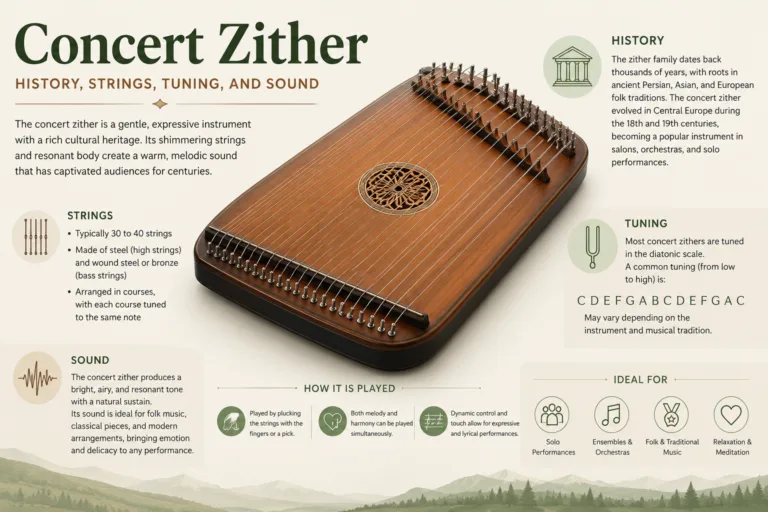
  • Concert Zither: History, Strings, Tuning, and Sound

    A concert zither[1] is a European table zither with two working areas: a fretted melody side and a larger field of unstopped strings for harmony, bass, and color. Its left-hand fretboard[2] makes it different from many other zithers, yet its strings still run across the body rather than along a separate neck. The word zither[3]…

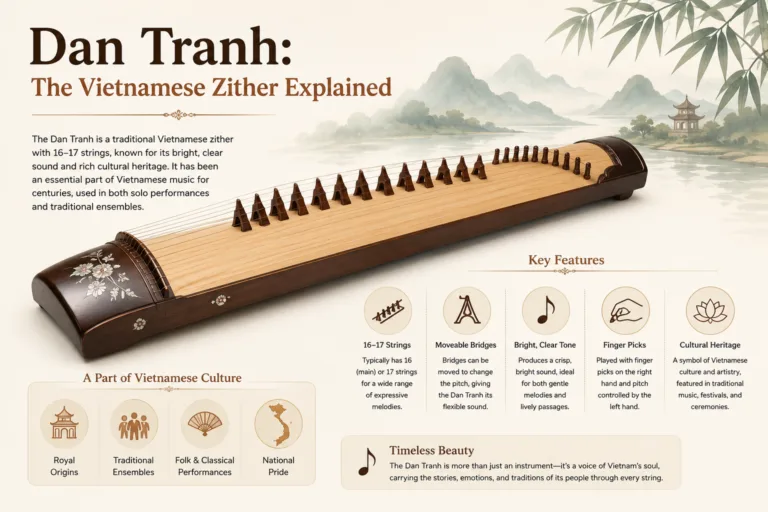
  • Dan Tranh: The Vietnamese Zither Explained

    The đàn tranh is a Vietnamese plucked zither[1] with a long wooden body, metal strings, movable bridges, and a bright singing tone shaped by the player’s two hands. It belongs to the wider zither family, but it is not simply a Vietnamese copy of the guzheng, koto, or gayageum. Its construction, ornamentation, repertory, and playing…

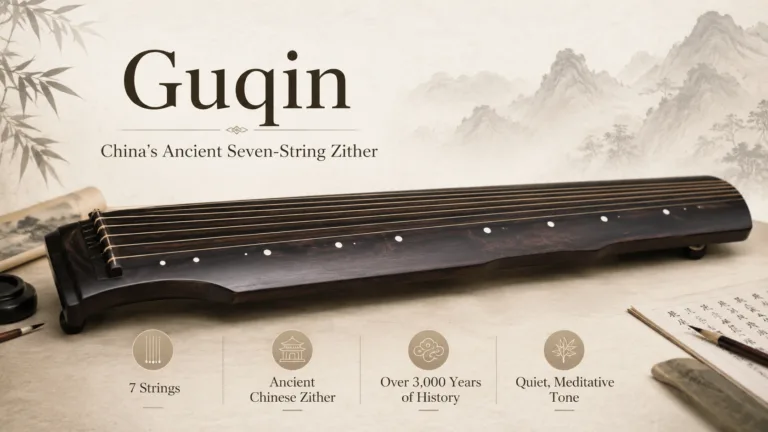
  • Guqin: China’s Ancient Seven-String Zither

    The guqin is a quiet, fretless seven-string zither[1] from China, played with bare fingers while it rests flat on a table. Its long wooden body, smooth playing surface, thirteen position markers, and highly controlled sliding tones make it very different from bridge-based zithers such as the guzheng, koto, or gayageum. The guqin is not a…

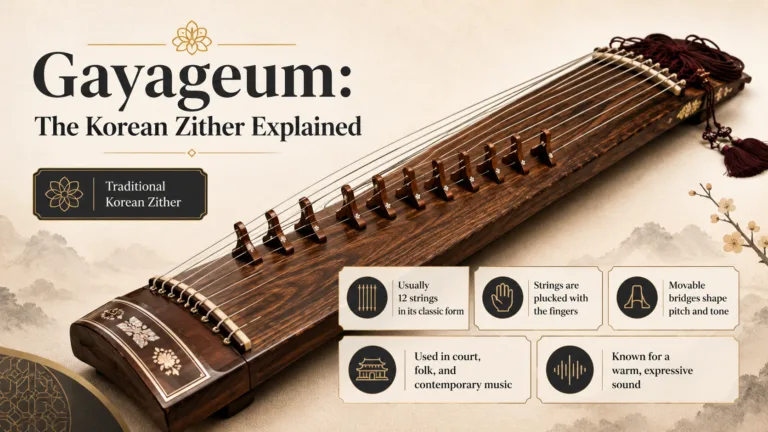
  • Gayageum: The Korean Zither Explained

    The gayageum is a Korean plucked zither: a long wooden instrument with strings stretched across a resonant body and supported by individual movable bridges[1]. Its sound is shaped not only by plucking, but also by pressing, bending, and shaking the strings after they have been sounded. That left-hand control gives the gayageum much of its…

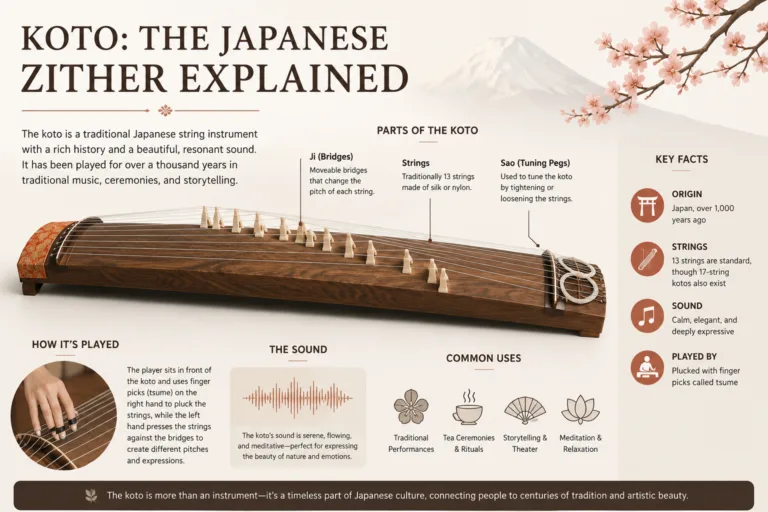
  • Koto: The Japanese Zither Explained

    The koto is a Japanese plucked zither[1] with a long wooden body, movable bridges, and strings that run along the length of the instrument rather than away from the player like a harp. Its best-known form has thirteen strings, but modern and regional forms can use other string counts, different materials, and altered playing setups….

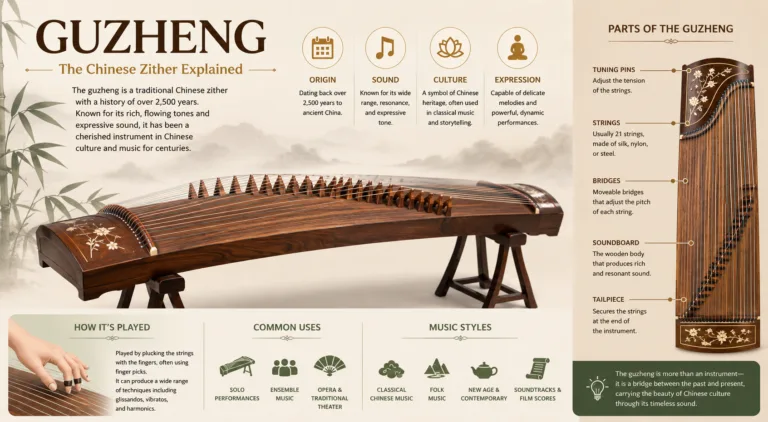
  • Guzheng: The Chinese Zither Explained

    The guzheng is a Chinese plucked zither with a long resonant body, individual movable bridges, and strings that are usually tuned to a pentatonic pattern. Its sound is shaped not only by plucking, but also by pressure, bending, vibrato, and gliding gestures made on the string segments beside the bridges. That mix of clear attack,…