Zither Instruments Around the World
Explore zither instruments by region, construction, string layout, playing method and musical tradition. The collection covers instrument definitions, comparisons, tuning, performance, history, buying and care.
Zither Basics
Definitions, structural forms and terminology used across different members of the zither family.
What Is a Zither?
The meaning of the term, how zither strings relate to the instrument body and why the word can describe both a specific instrument and a wider family.
Read the articleTypes of Zithers
Board, box, tube, raft and trough forms, with the main structural differences between plucked, struck and bowed instruments.
Explore the typesZithers by Country
A country-based overview of instrument names, regional traditions and related zither forms around the world.
Browse by countryZithers by Region
Regional collections retain the names, construction traditions and playing practices associated with each instrument.
Asian Zithers
Guzheng, koto, gayageum, guqin and đàn tranh, including their strings, bridges, tuning and performance traditions.
Open Asian ZithersEuropean Zithers
Concert zither, kantele, gusli, scheitholt and related Alpine, Baltic, Slavic and fretted traditions.
Open European ZithersMiddle Eastern Zithers
Qanun, santur, psaltery and related plucked or struck instruments, with attention to construction and regional use.
Open Middle Eastern ZithersCompare Instruments
Side-by-side explanations based on body form, strings, bridges, tuning, sound and playing technique.
Qanun vs Zither
A qanun belongs to the wider zither family, but it differs from European concert zithers in body shape, string courses, pitch levers and playing technique.
Read the comparisonGuqin vs Guzheng
Two Chinese zithers compared through string count, movable bridges, tone, pitch shaping, playing position and musical setting.
Read the comparisonZither vs Autoharp
How the autoharp fits inside the broader zither family and how its chord-bar mechanism changes the way it is played.
Read the comparisonTuning, Playing, Buying and Care
Practical information for identifying an instrument, setting it up, learning its layout, assessing a purchase and maintaining it.
Tuning and Playing
Instrument-specific setup and playing information for beginners and owners.
Buying and Care
Purchase checks, typical costs, beginner choices and routine instrument maintenance.
Editorial responsibility
Zither terminology can differ by language, region and classification system. Source questions, corrections and missing context can be sent through the site contact page.
Latest Articles
The newest published articles from every category, ordered by publication date.
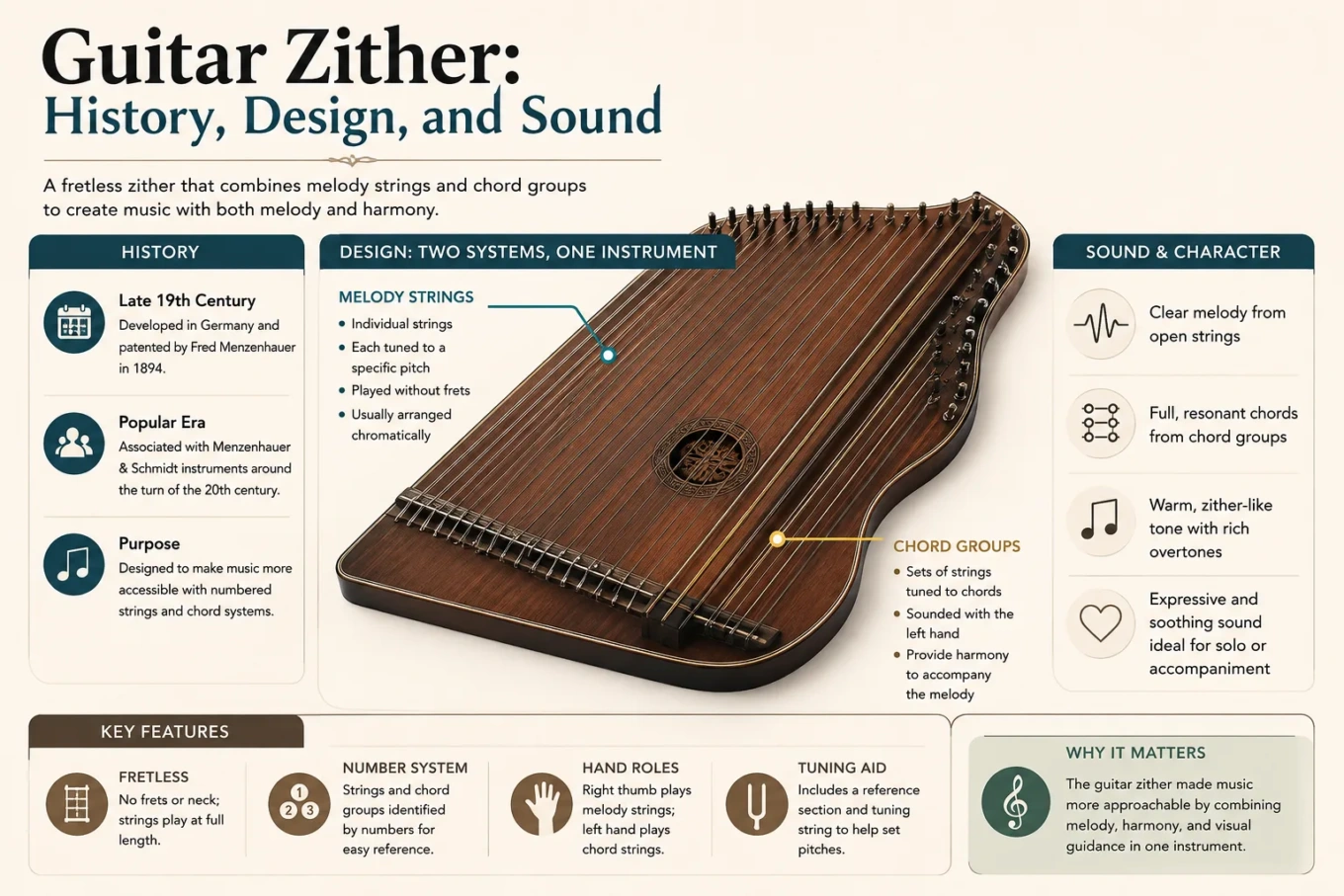
Guitar Zither: History, Design, and Sound
A guitar zither is a fretless zither built around two different kinds of string work: individual strings for melody and grouped strings for ready-made harmony. Despite the name, it normally has no projecting guitar neck and no guitar-style fingerboard. The label refers more closely to its chordal effect than to guitar construction. The form became…
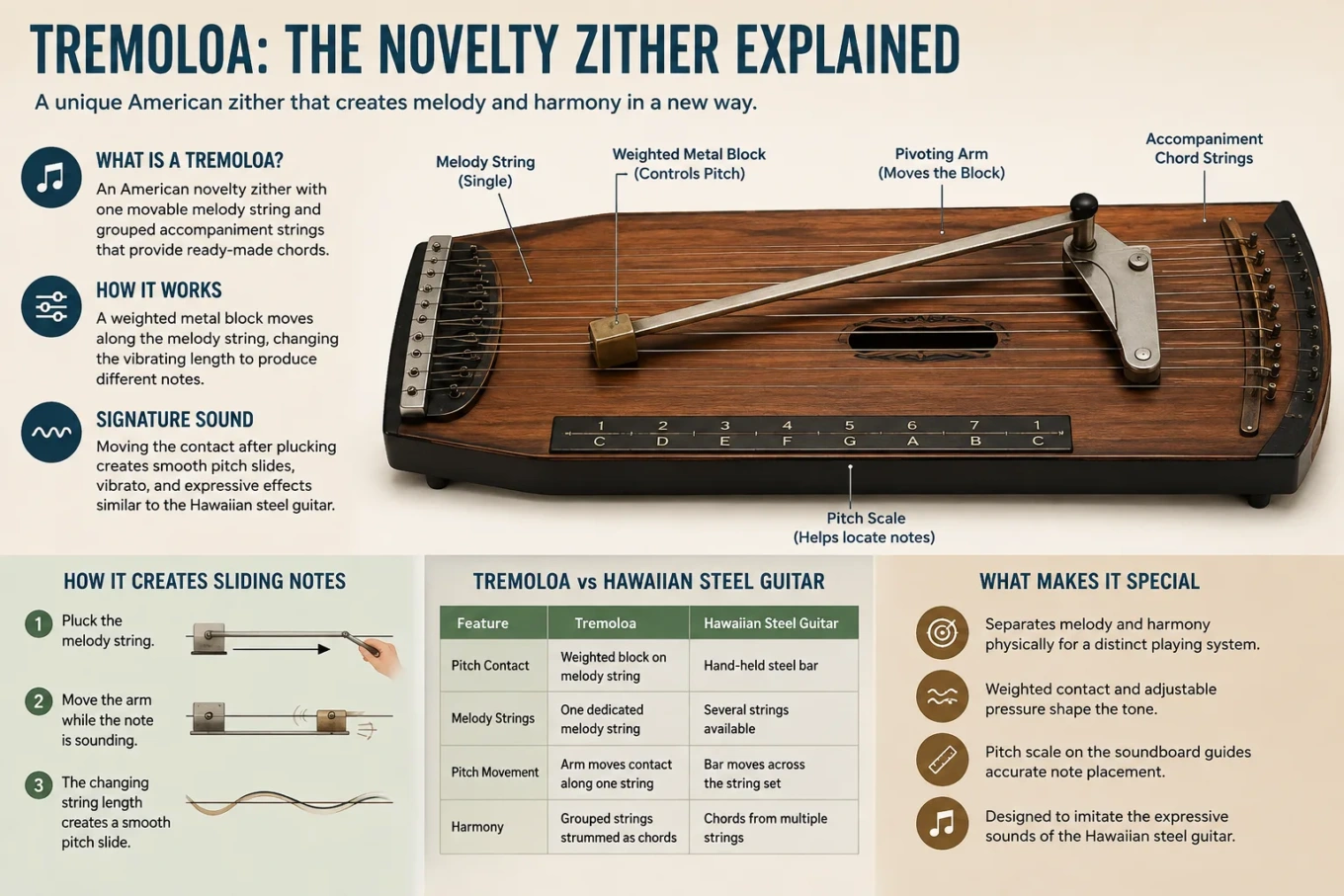
Tremoloa: The Novelty Zither Explained
The Tremoloa is an American novelty zither built around one unusually specific musical idea: a single melody string is controlled by a movable metal contact while grouped accompaniment strings supply ready-made chords. Instead of fretting notes with the fingers, the player moves a pivoting arm so that a weighted block travels along the melody string.…
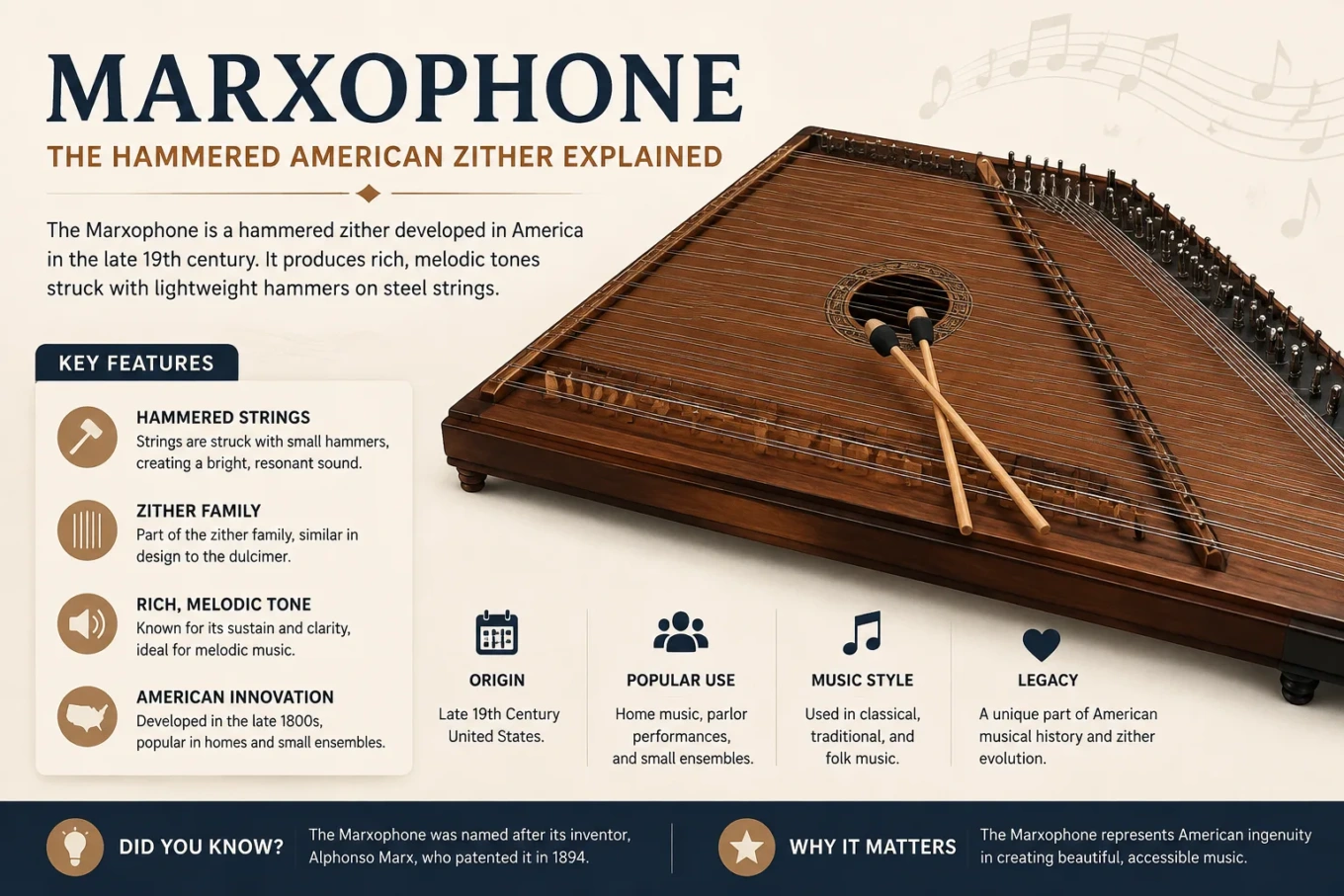
Marxophone: The Hammered American Zither Explained
The Marxophone is an American fretless zither[1] distinguished by a row of finger-operated metal springs that make small hammers strike paired melody strings. It belongs to the broad chordophone[2] family, yet its playing action can look deceptively keyboard-like. The player does not hold mallets as on a hammered dulcimer. Instead, pressing a spring-steel strip sets…
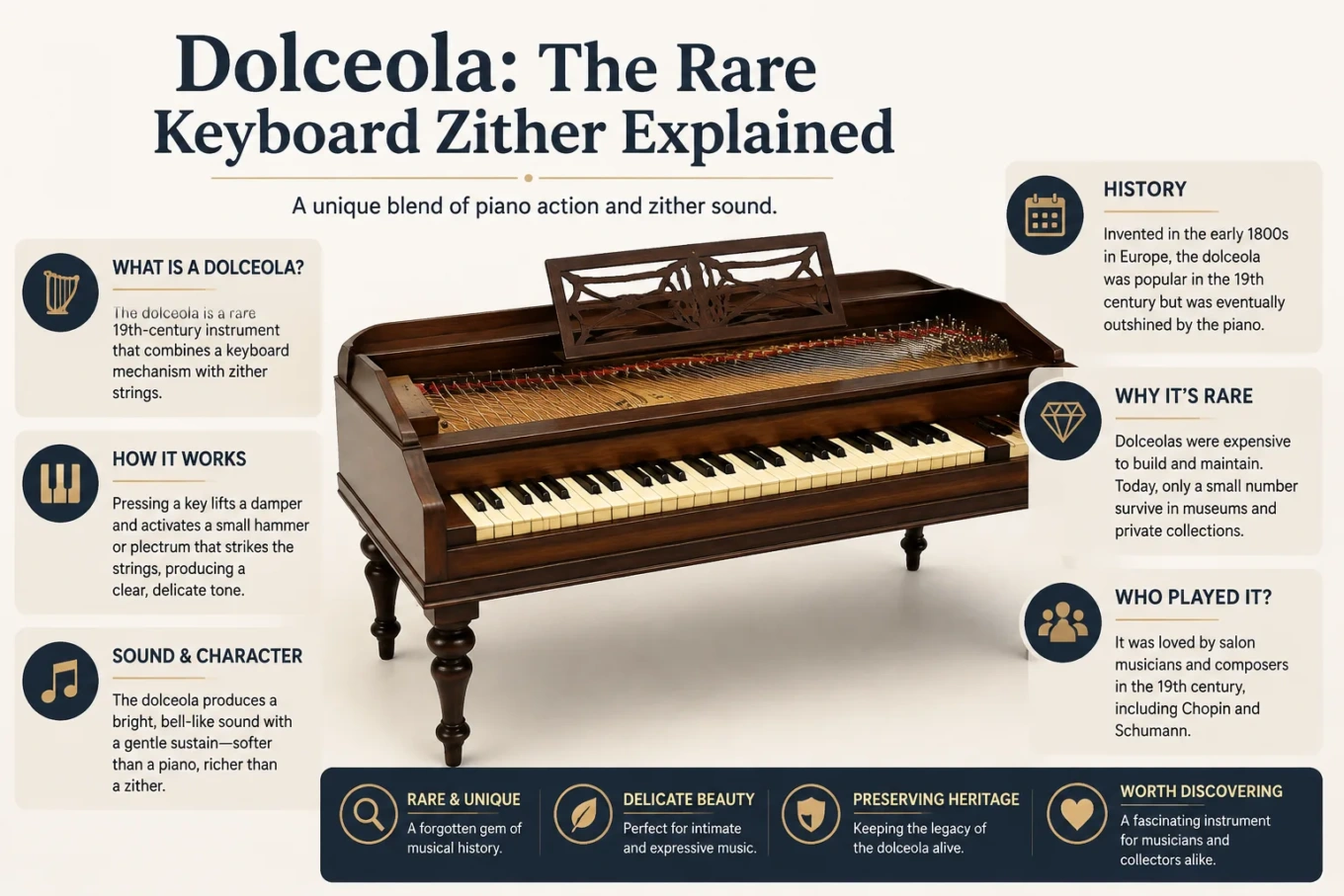
Dolceola: The Rare Keyboard Zither Explained
The Dolceola is a rare American keyboard zither[1] that can look like a miniature piano until its strings, key layout, and playing mechanism are examined closely. Made by the Toledo Symphony Company in Toledo, Ohio, during the first decade of the twentieth century, it combines a piano-like keyboard with the string arrangement of a zither.…
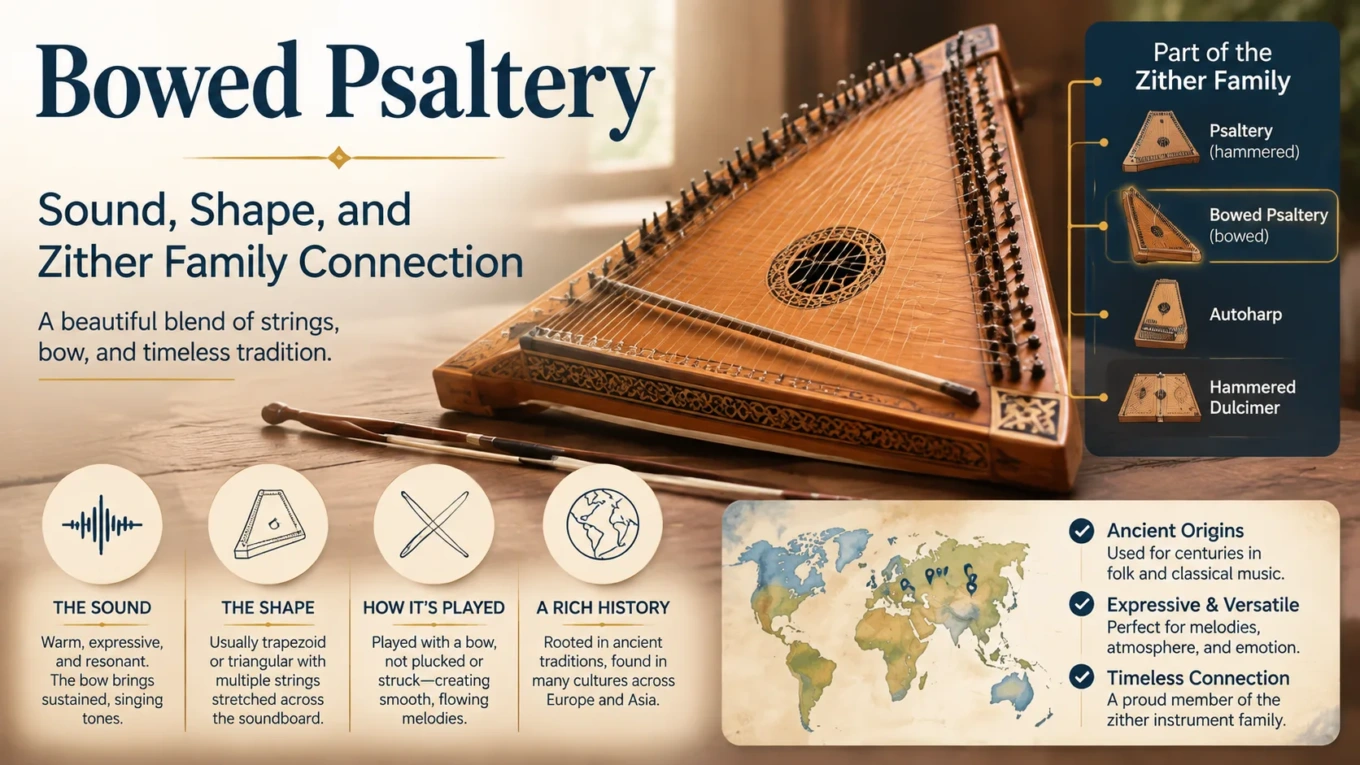
Bowed Psaltery: Sound, Shape, and Zither Family Connection
The bowed psaltery looks like a small triangular instrument from an older European tradition, yet the familiar modern form works according to a distinctly practical idea: many individually tuned strings are arranged so that a bow can reach them one by one. It is a bowed chordophone[1], but the presence of a bow does not…
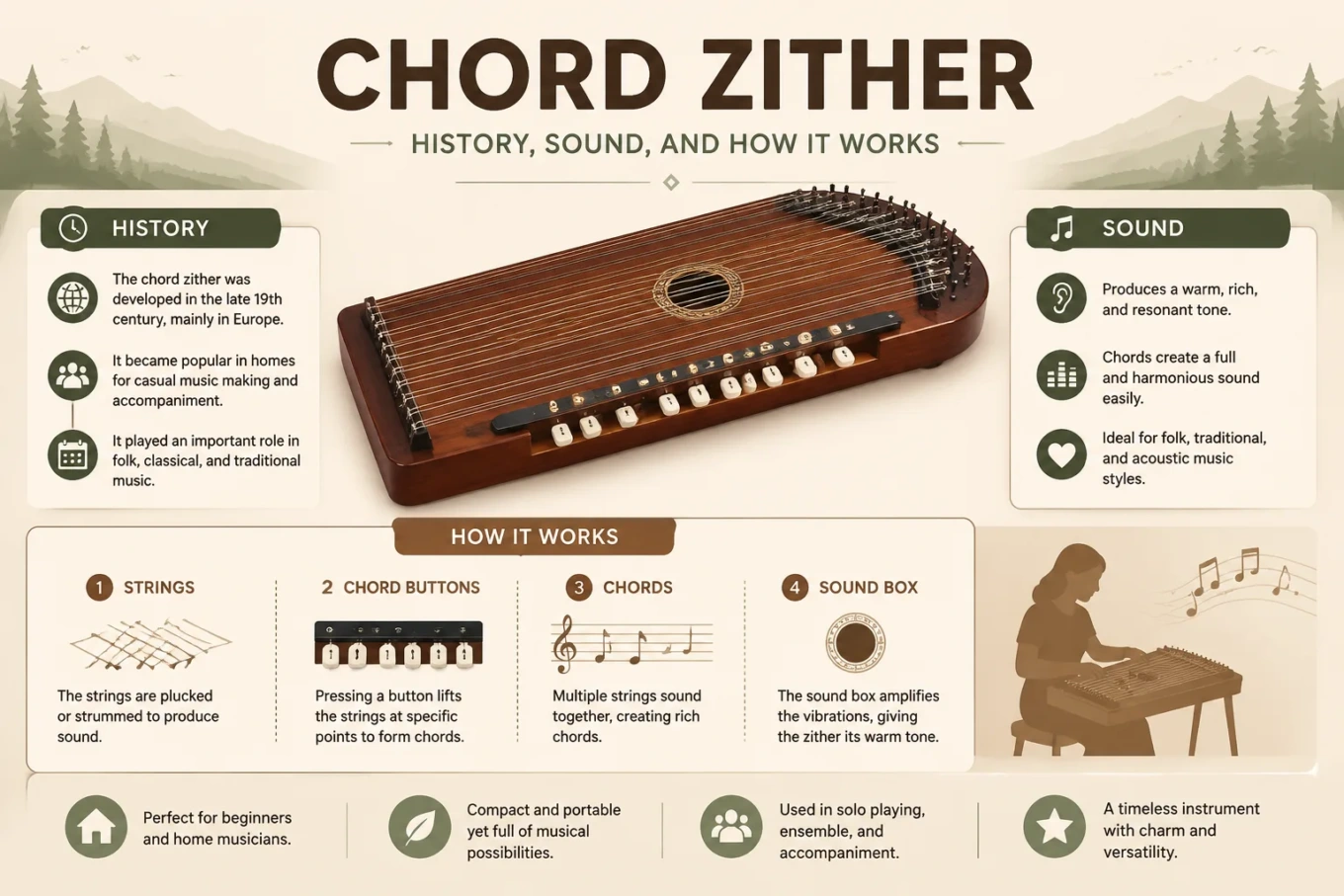
Chord Zither: History, Sound, and How It Works
A chord zither is a fretless zither built around a simple musical idea: individual melody strings[1] occupy one part of the instrument, while separate groups of strings are already tuned to usable chords. The player can therefore move between melody and accompaniment without forming guitar-style chord shapes or operating the chord bars found on an…
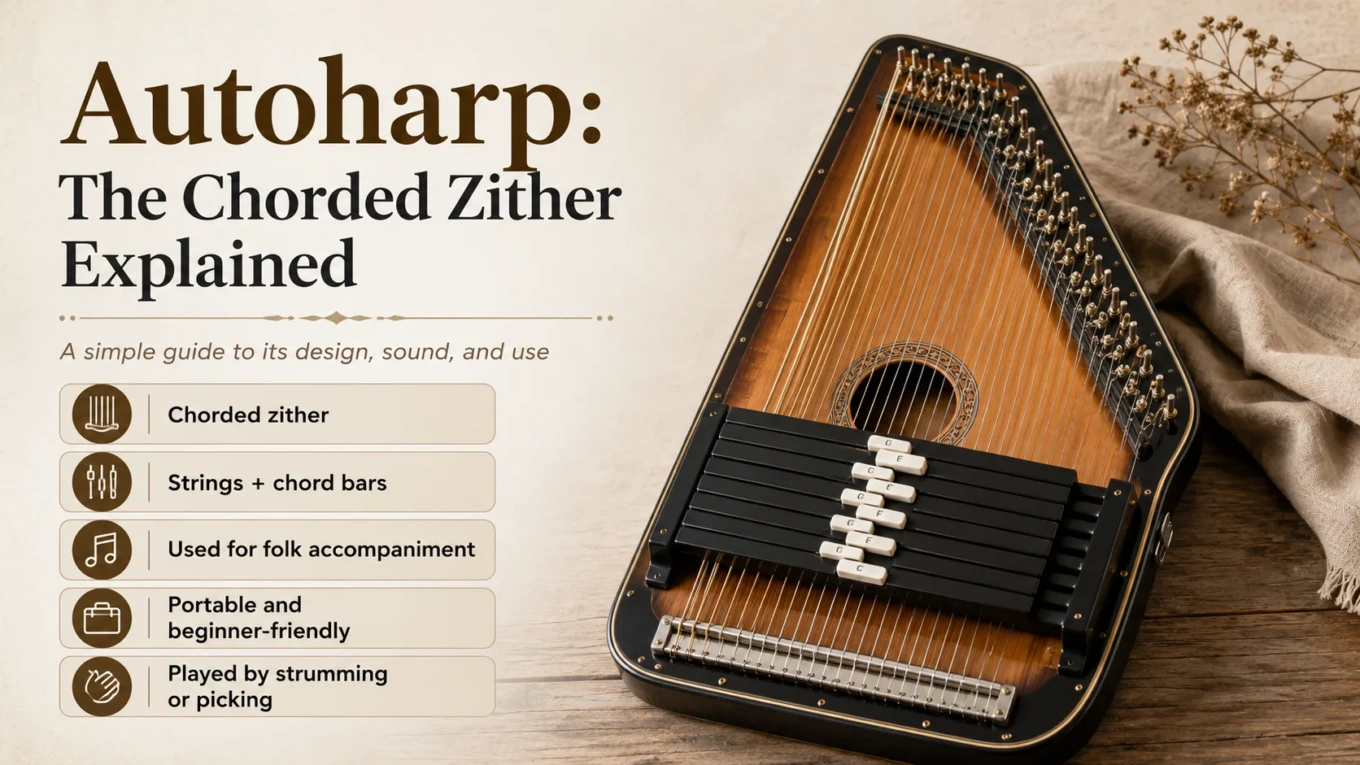
Autoharp: The Chorded Zither Explained
Pressing an Autoharp chord button does not tune the strings, move them to new pitches, or generate a chord electronically. The button operates a selective damping system: a chord bar allows the notes belonging to the chosen harmony to remain free while stopping the others. That simple mechanical idea is what makes the Autoharp one…
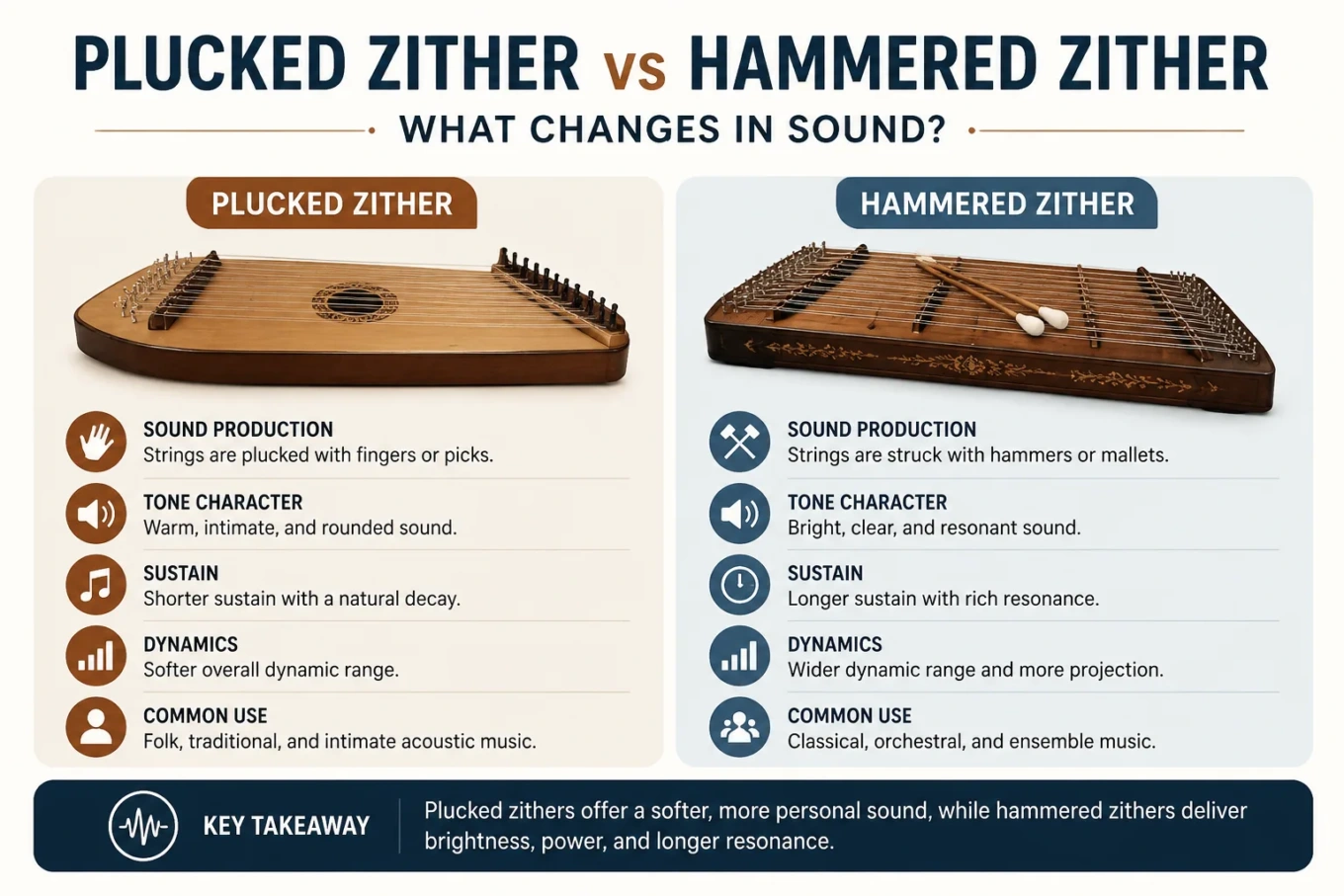
Plucked Zither vs Hammered Zither: What Changes in Sound?
A plucked zither and a hammered zither can use strings of similar pitch and still produce noticeably different note shapes. The main reason is not simply that one sounds “soft” and the other “bright.” It is how energy enters the string. A plucked string is displaced and released; a hammered string receives a short impact.…
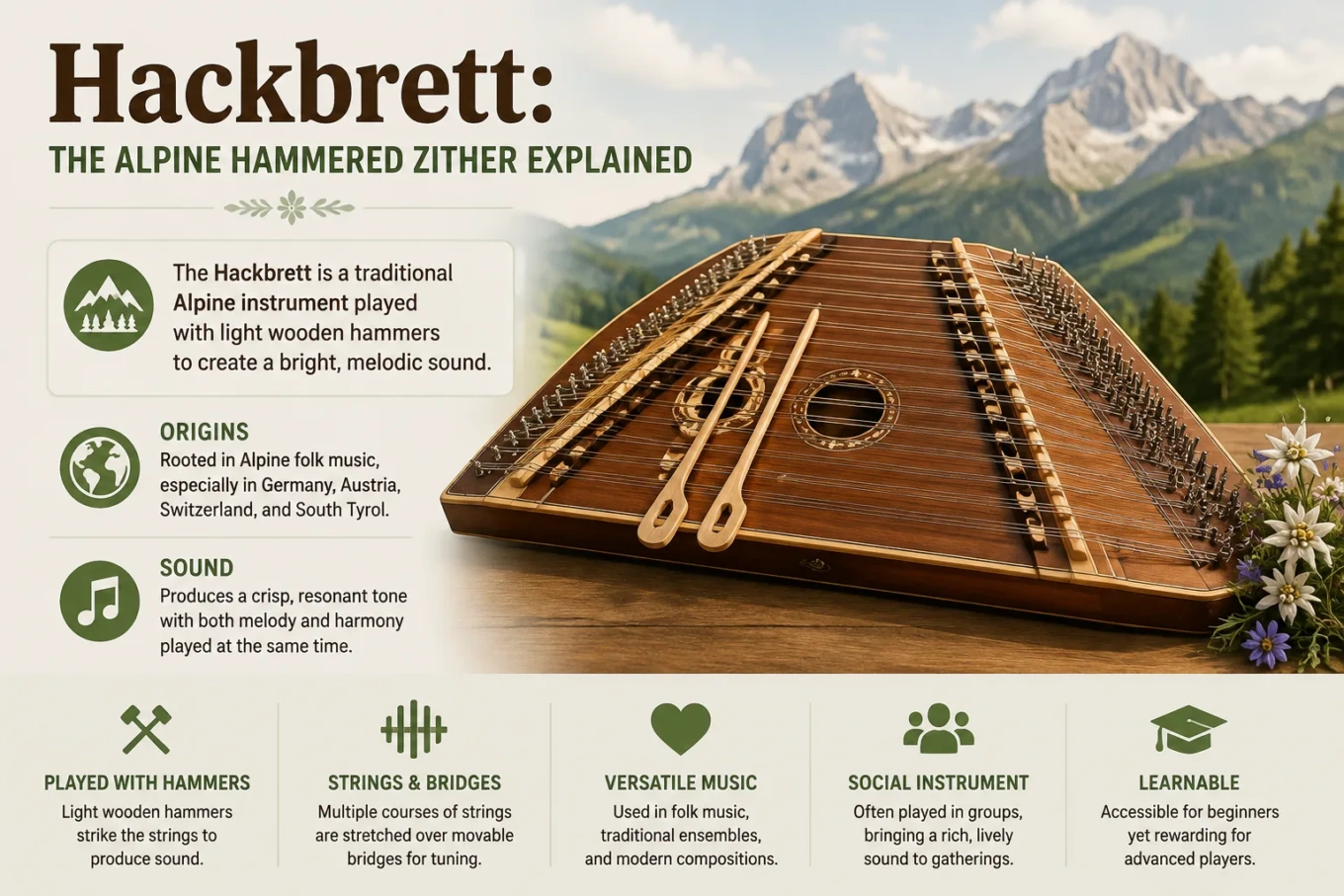
Hackbrett: The Alpine Hammered Zither Explained
The Hackbrett is an Alpine hammered zither whose strings are stretched across a shallow, usually trapezoidal body and struck with a pair of light beaters. In organological terms, it belongs to the struck-zither branch of chordophones[1], but the name does not describe one standardized instrument. Austrian, Bavarian, South Tyrolean, and Swiss traditions developed different string…