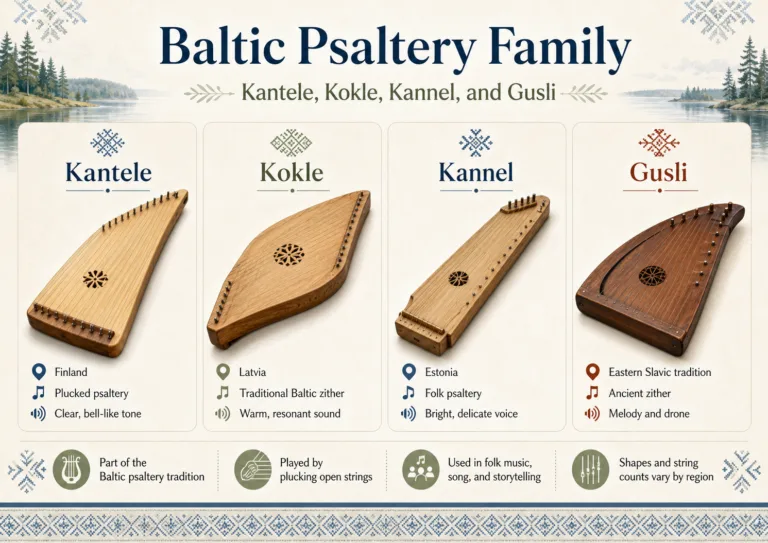
Baltic Psaltery Family: Kantele, Kokle, Kannel, and Gusli
The Baltic psaltery family is a northern group of plucked string instruments built around a simple...
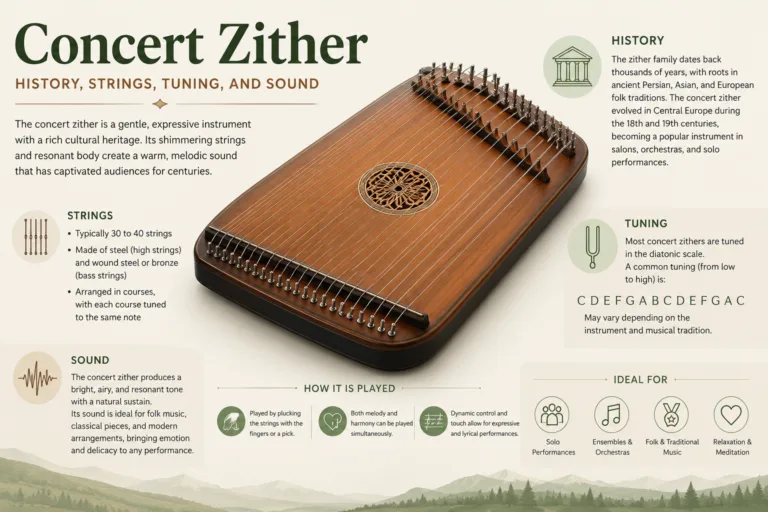
Concert Zither: History, Strings, Tuning, and Sound
A concert zither[1] is a European table zither with two working areas: a fretted melody side...
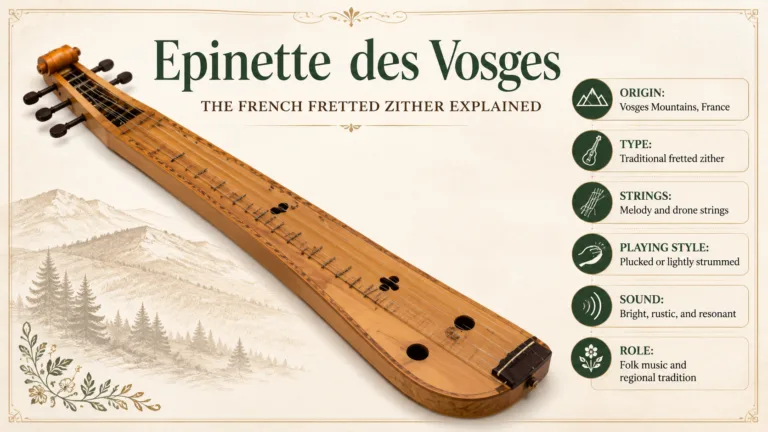
Epinette des Vosges: The French Fretted Zither Explained
The Épinette des Vosges is a narrow French fretted zither[1] from the Vosges region, built around...
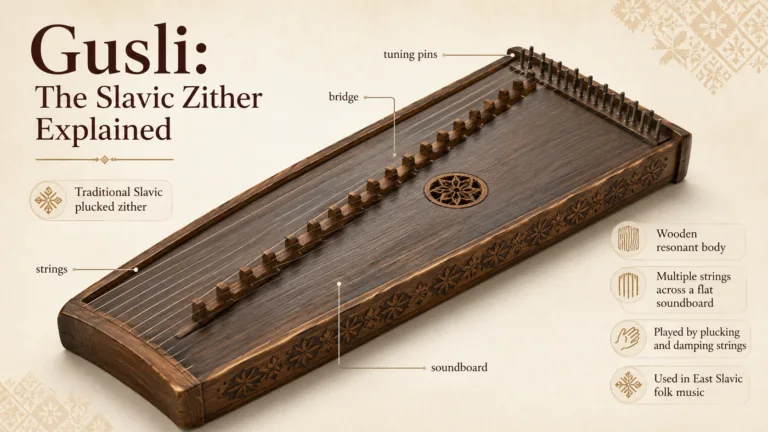
Gusli: The Slavic Zither Explained
The gusli is a Slavic plucked zither[1]: a string instrument whose strings lie across a wooden...
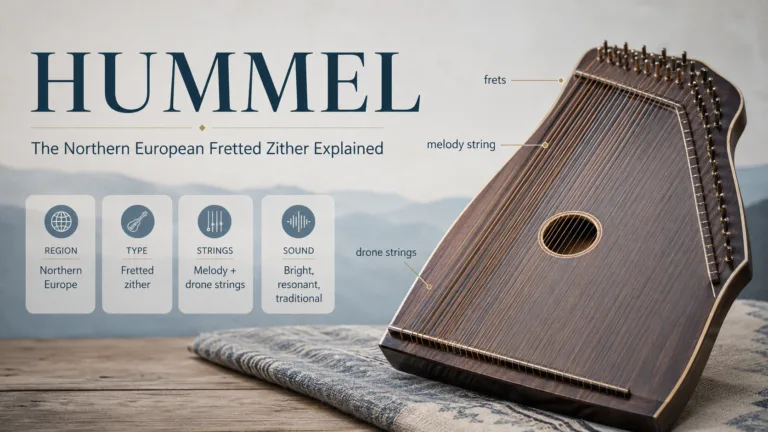
Hummel: The Northern European Fretted Zither Explained
A hummel is a Northern European fretted zither[1] built around a simple but useful idea: a...
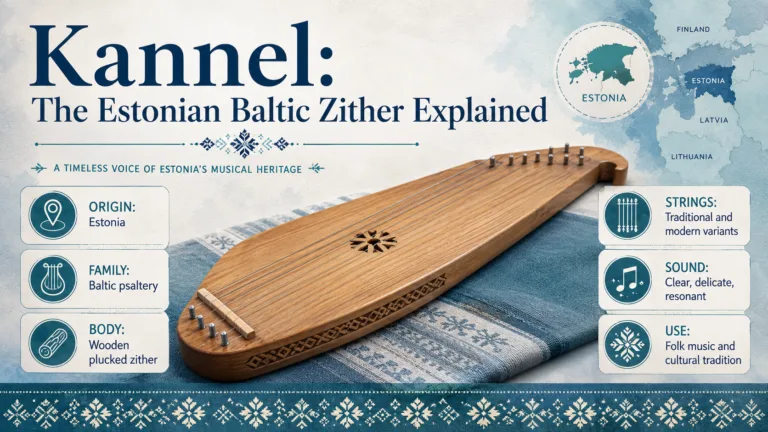
Kannel: The Estonian Baltic Zither Explained
Kannel is the Estonian member of the Baltic zither tradition: a plucked chordophone[1] whose strings run...
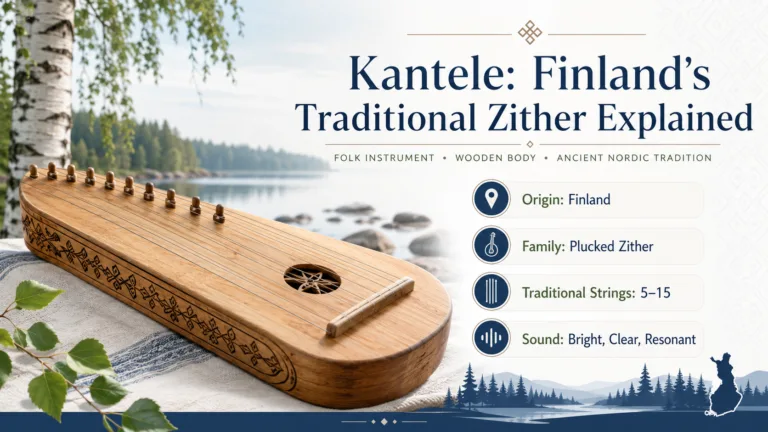
Kantele: Finland’s Traditional Zither Explained
The kantele is a Finnish and Karelian plucked zither[1] with a clear identity of its own:...
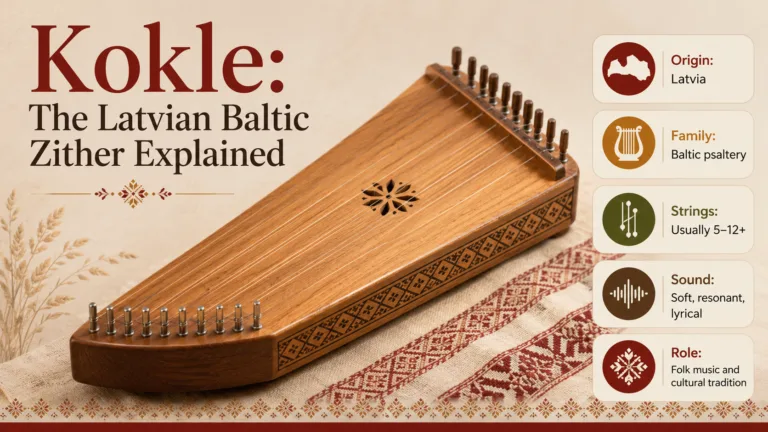
Kokle: The Latvian Baltic Zither Explained
The kokle is a Latvian plucked zither[1]: its strings run across a resonant wooden body rather...
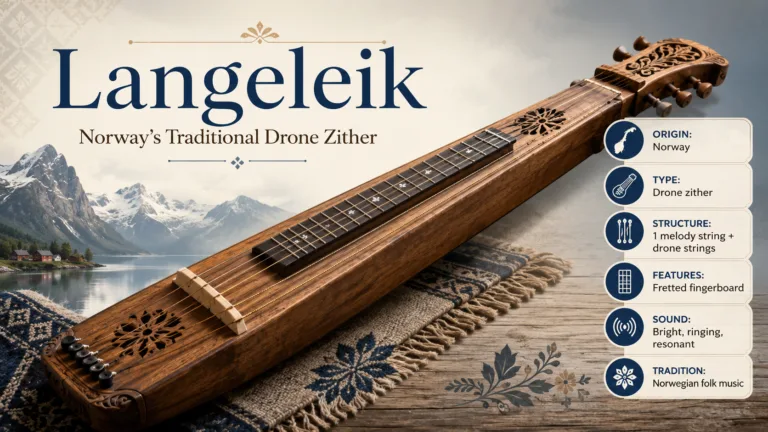
Langeleik: Norway’s Traditional Drone Zither Explained
The langeleik is a Norwegian drone zither: a long, narrow string instrument that sets one fretted...
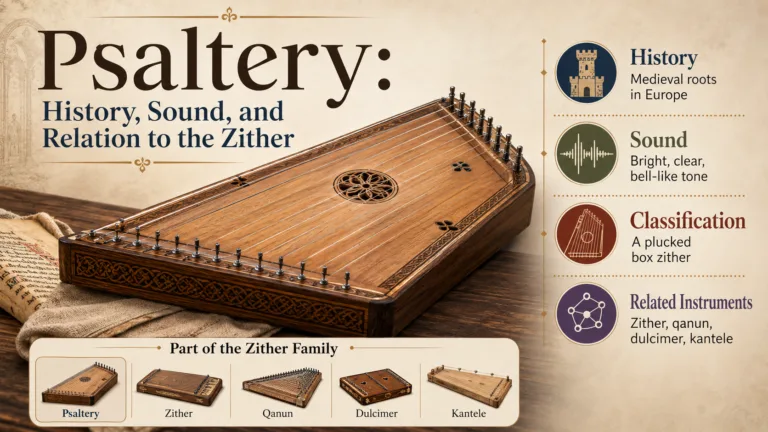
Psaltery: History, Sound, and Relation to the Zither
The psaltery is best understood as a plucked box zither: a stringed instrument whose strings run...
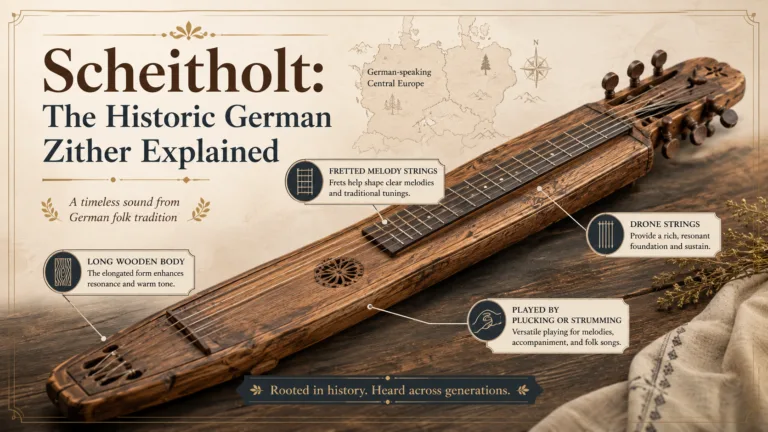
Scheitholt: The Historic German Zither Explained
The scheitholt is a historic German fretted zither: a narrow wooden instrument with strings stretched along...
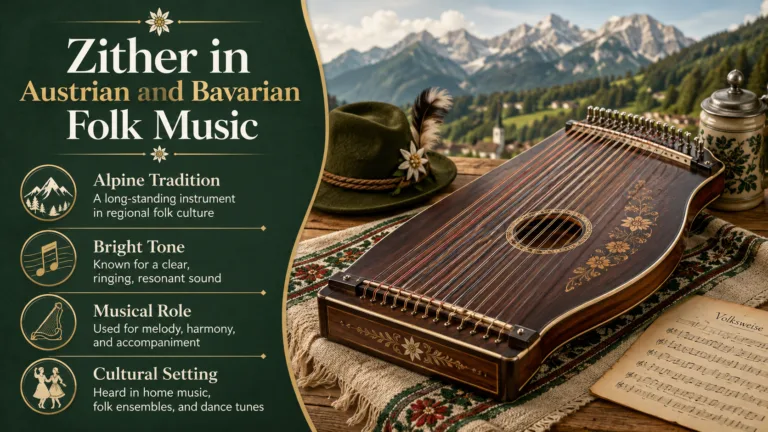
Zither in Austrian and Bavarian Folk Music
In Austrian and Bavarian folk music, the zither is not just a flat string instrument placed...
12 articles in European Zithers