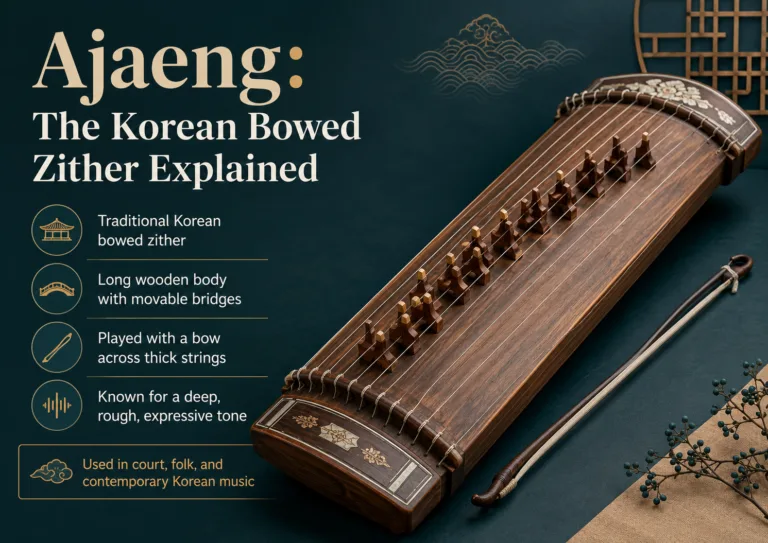
Ajaeng: The Korean Bowed Zither Explained
Ajaeng is a Korean bowed zither[1] with a long horizontal body, thick strings, and a low,...
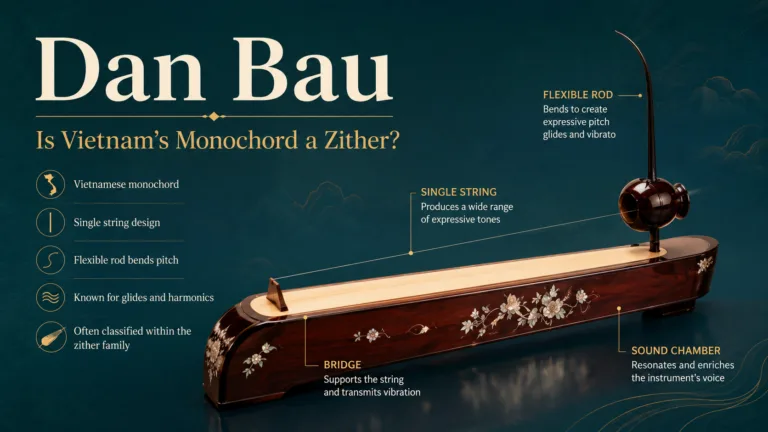
Dan Bau: Is Vietnam’s Monochord a Zither?
The dan bau is best understood as a Vietnamese monochord[1] and, in the broad organological sense,...
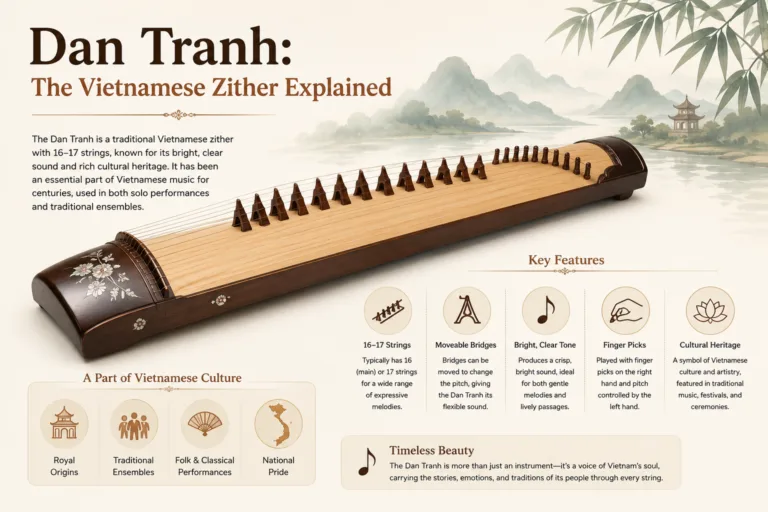
Đàn Tranh: The Vietnamese Zither Explained
The đàn tranh is a Vietnamese plucked zither[1] with a long wooden body, metal strings, movable...
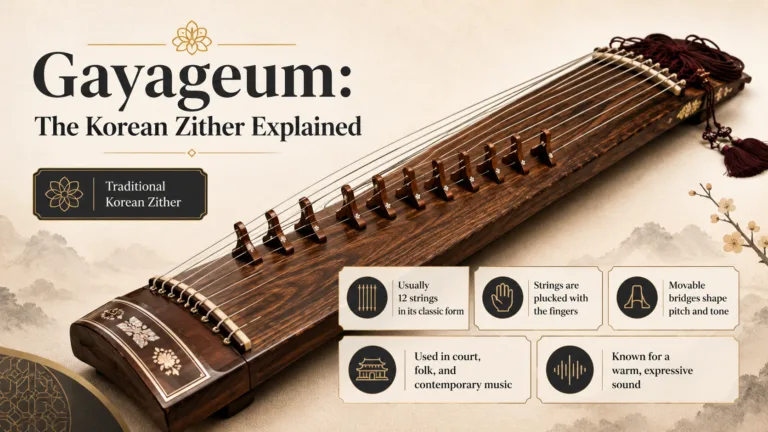
Gayageum: The Korean Zither Explained
The gayageum is a Korean plucked zither: a long wooden instrument with strings stretched across a...
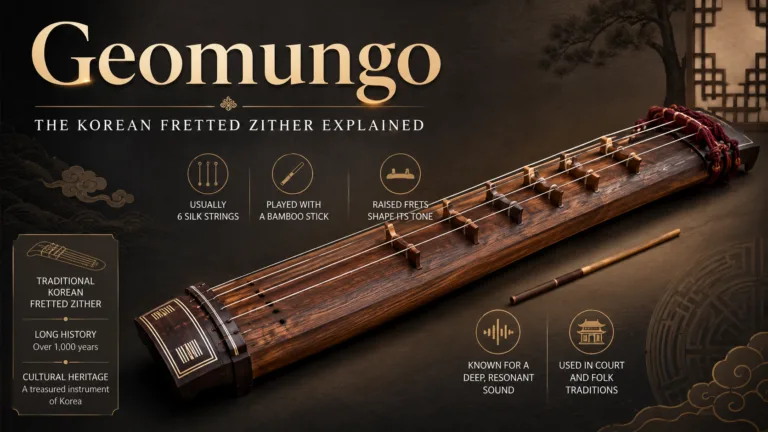
Geomungo: The Korean Fretted Zither Explained
Geomungo is a Korean fretted zither[1] with a long wooden body, six strings in its standard...
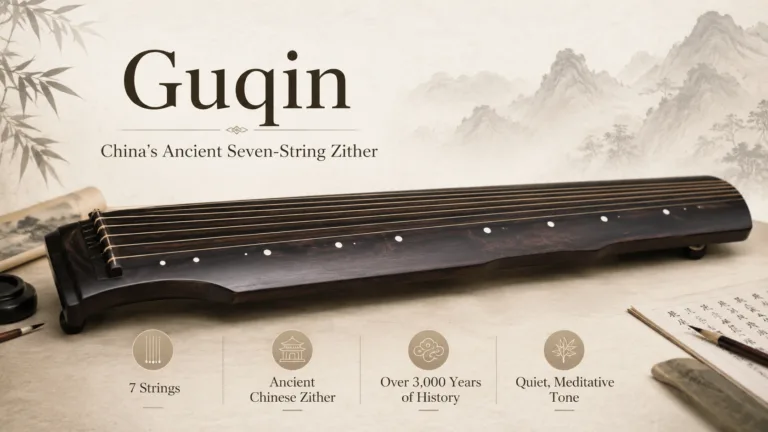
Guqin: China’s Ancient Seven-String Zither
The guqin is a quiet, fretless seven-string zither[1] from China, played with bare fingers while it...
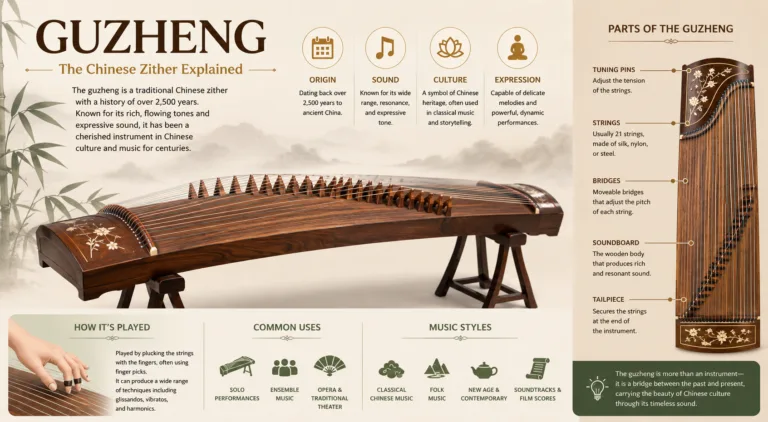
Guzheng: The Chinese Zither Explained
A guzheng is a Chinese plucked zither built around a long resonating body, a row of...
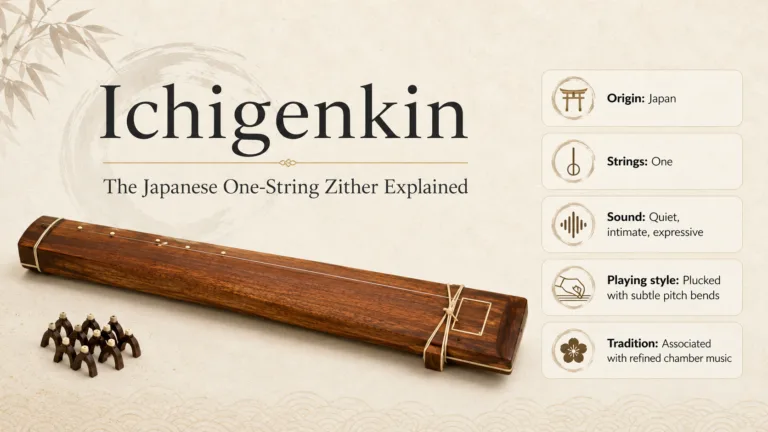
Ichigenkin: The Japanese One-String Zither Explained
The ichigenkin is a Japanese one-string zither[1] whose quiet voice comes from a narrow wooden plank,...
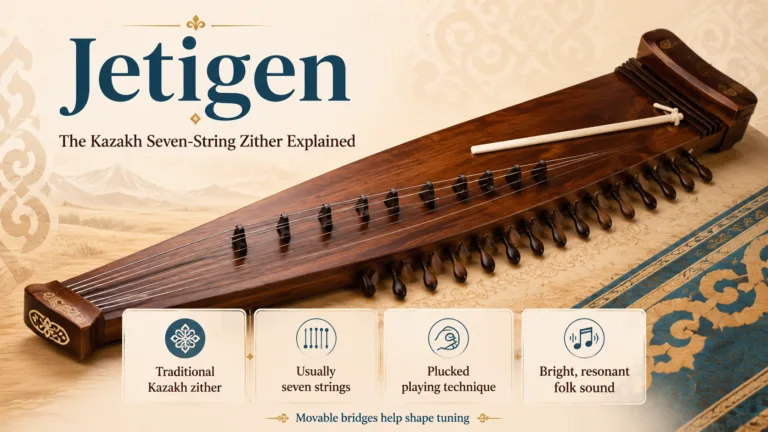
Jetigen: The Kazakh Seven-String Zither Explained
What Is the Jetigen? The Jetigen, often written zhetygen or zhetigen, is a Kazakh seven-string box...
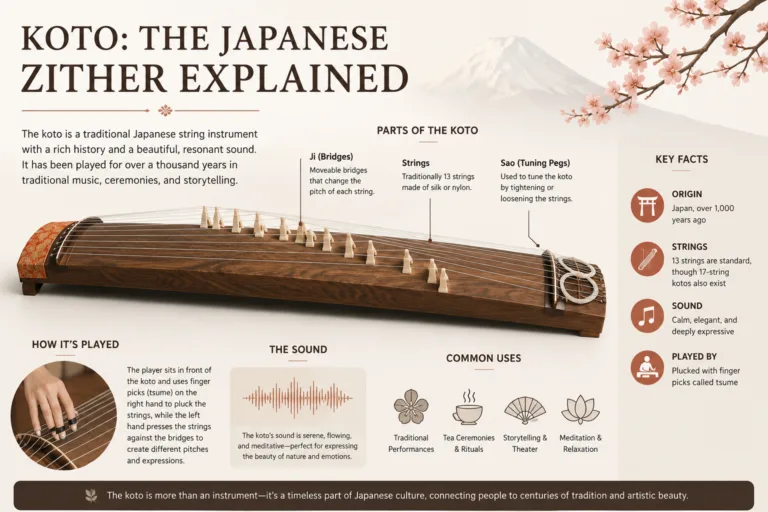
Koto: The Japanese Zither Explained
The koto is a Japanese plucked zither[1] with a long wooden body, movable bridges, and strings...
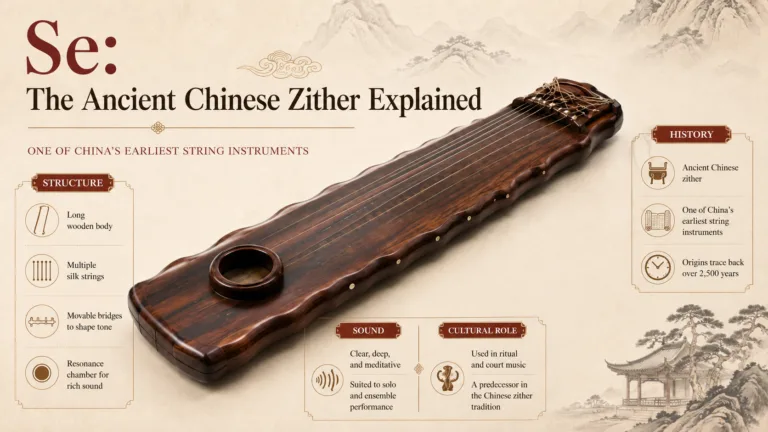
Se: The Ancient Chinese Zither Explained
Se (瑟, pinyin: sè) is an ancient Chinese zither[1] known for its long wooden body, many...
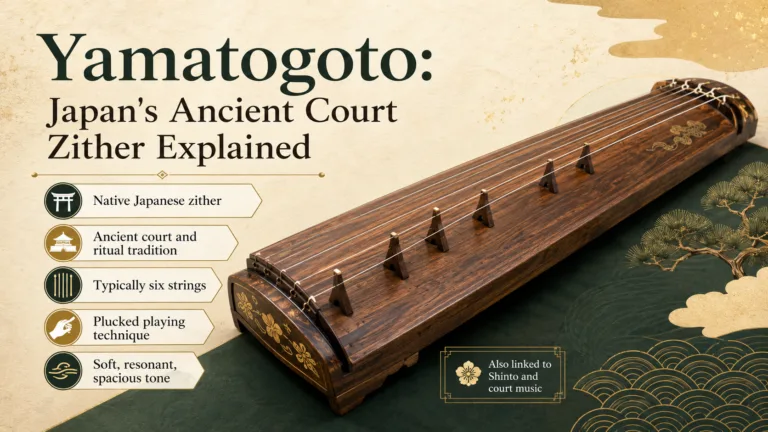
Yamatogoto: Japan’s Ancient Court Zither Explained
Yamatogoto, also called wagon, is a Japanese court zither with a narrow body, usually six strings,...
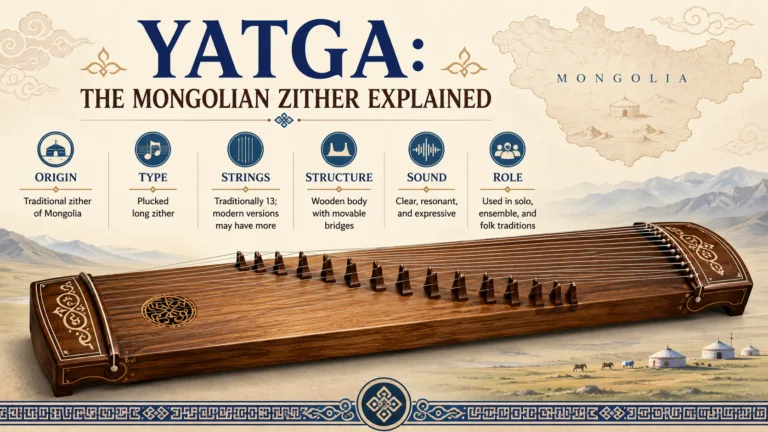
Yatga: The Mongolian Zither Explained
The yatga is a Mongolian plucked zither[1] with long strings stretched over a wooden body and...
13 articles in Asian Zithers