Hammered And Struck Zithers

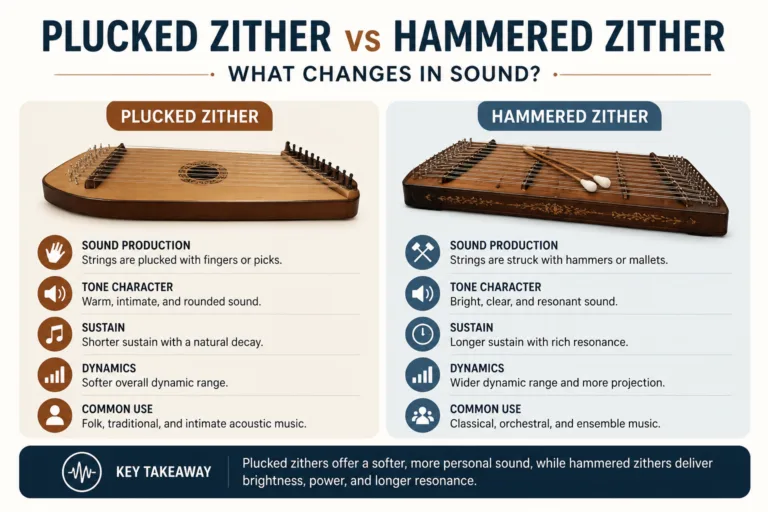
  • Plucked Zither vs Hammered Zither: What Changes in Sound?

    A plucked zither and a hammered zither can use strings of similar pitch and still produce noticeably different note shapes. The main reason is not simply that one sounds “soft” and the other “bright.” It is how energy enters the string. A plucked string is displaced and released; a hammered string receives a short impact….
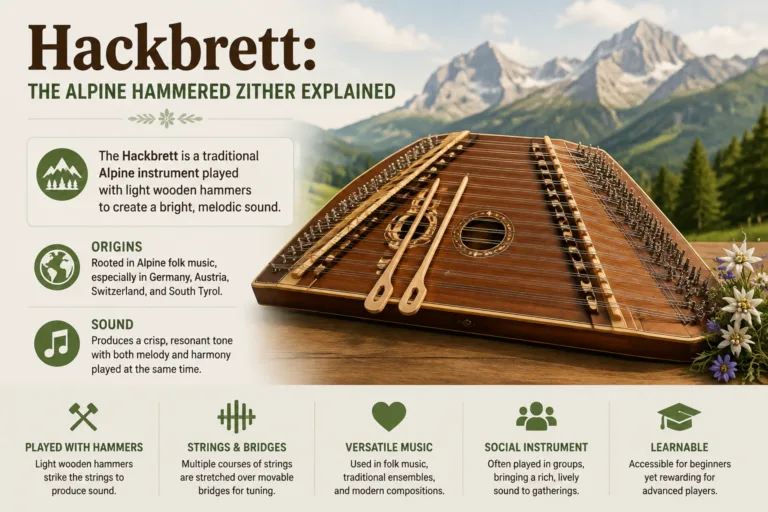
  • Hackbrett: The Alpine Hammered Zither Explained

    The Hackbrett is an Alpine hammered zither whose strings are stretched across a shallow, usually trapezoidal body and struck with a pair of light beaters. In organological terms, it belongs to the struck-zither branch of chordophones[1], but the name does not describe one standardized instrument. Austrian, Bavarian, South Tyrolean, and Swiss traditions developed different string…

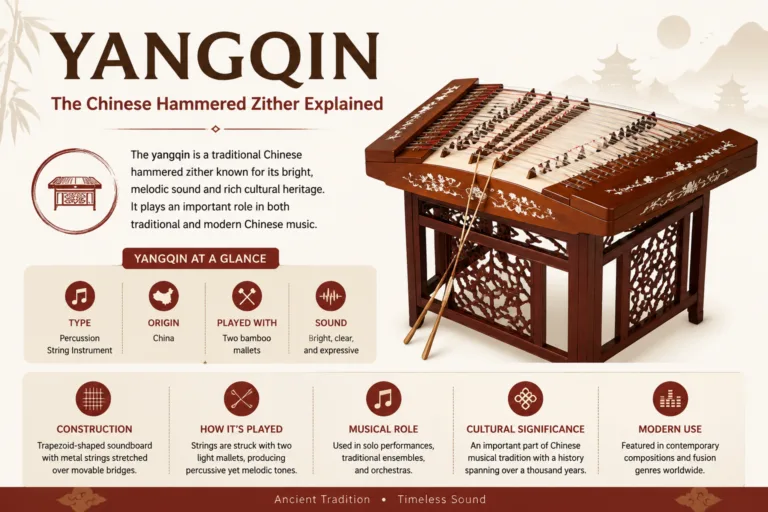
  • Yangqin: The Chinese Hammered Zither Explained

    The yangqin is a Chinese hammered zither: a trapezoidal string instrument whose metal strings are struck with a pair of light beaters rather than plucked with the fingers. In organological terms it is a chordophone[1] and, more specifically, a struck zither[2]. English-language museums and performers also describe it as a hammered dulcimer[3]. Its dense field…

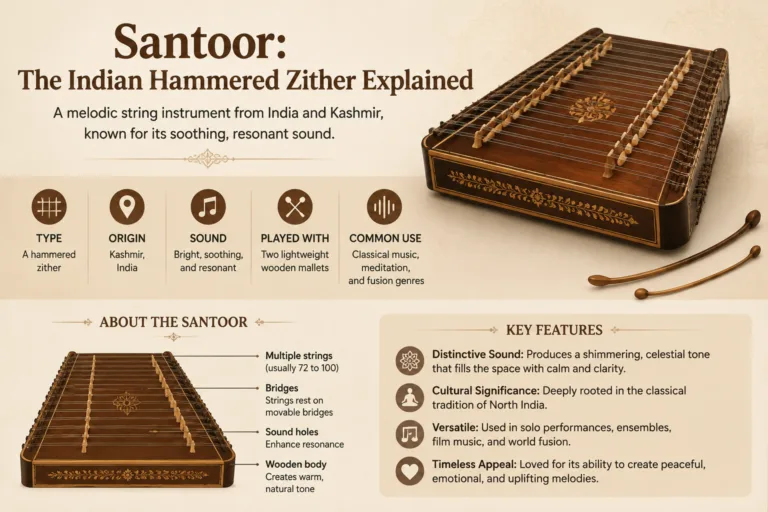
  • Santoor: The Indian Hammered Zither Explained

    The santoor is a Kashmiri hammered string instrument built around a simple idea with demanding musical consequences: dozens of metal strings are stretched across a broad wooden body and struck with two light wooden mallets. In organological terms, it is a chordophone[1] and a struck zither[2]. The strings run across the instrument itself rather than…

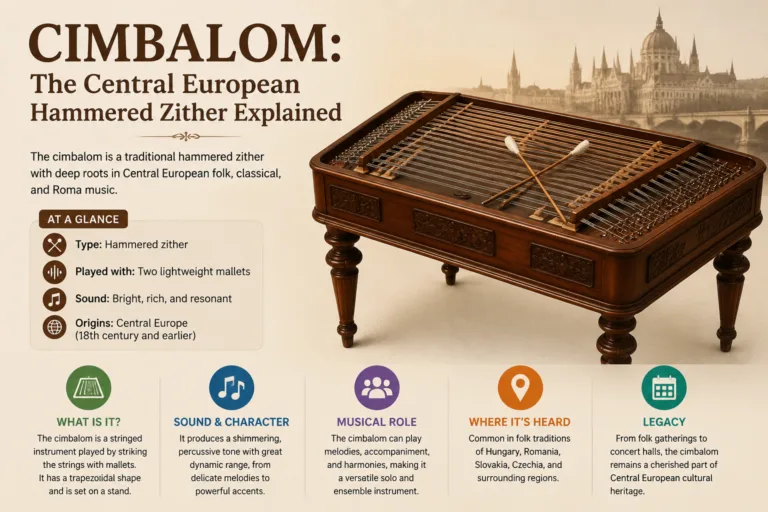
  • Cimbalom: The Central European Hammered Zither Explained

    The cimbalom is a large Central European hammered zither[1] played by striking metal strings with a pair of handheld beaters. Its concert form is immediately recognizable: a broad trapezoidal body stands on legs, dense rows of strings cross several bridges, and a foot-operated damping system controls how freely those strings continue to ring. That description…