African And Oceanic Zithers

  • Ground Zithers Explained: Early Forms, Structure, and Sound

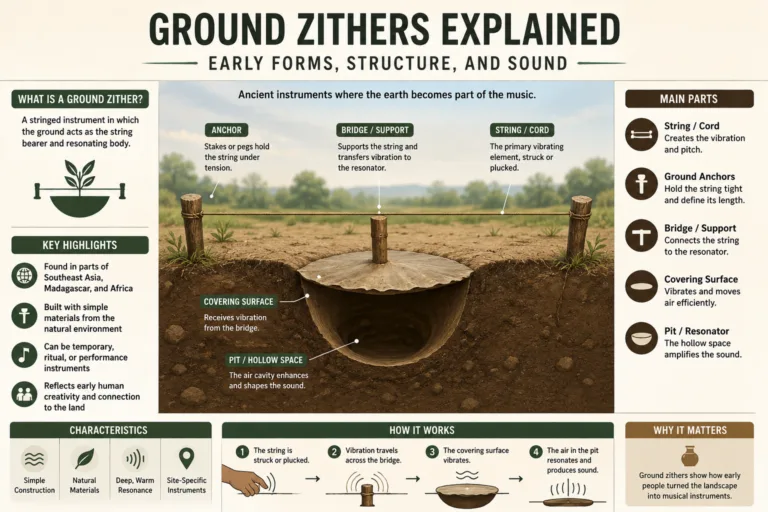
    A ground zither reduces the zither principle to an unusually spare arrangement: a stretched string, fixed points, and the ground itself acting as the string bearer[1]. In documented forms, a pit, covered surface, bridge, or connecting cord may turn that simple stretched line into an audible musical system. The instrument can look more like a…
  • Oceanic Zithers: Bamboo, Tube, and Indigenous String Instruments

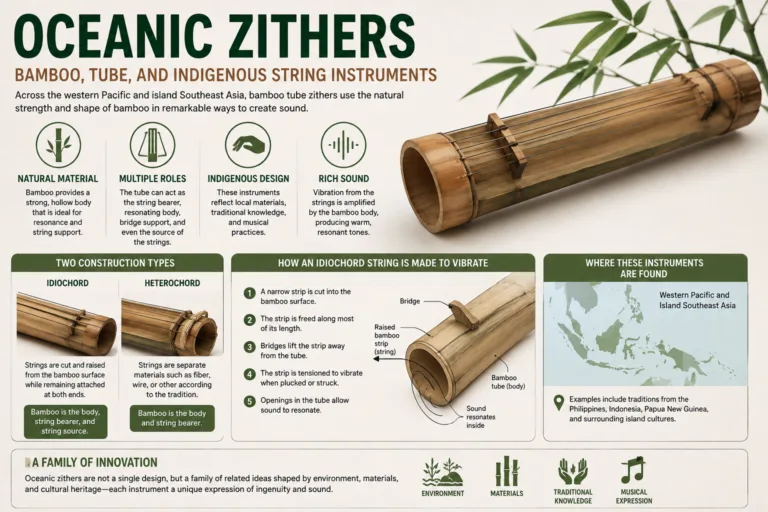
    Across the western Pacific and island Southeast Asia, some zithers turn a bamboo tube into far more than a container for strings. The tube can act as the string bearer[1], part of the resonating body, a support for small bridges, and, in idiochord[2] forms, even the source of the strings themselves. Narrow strips are cut…

  • African Zithers: Types, Regions, and Playing Traditions

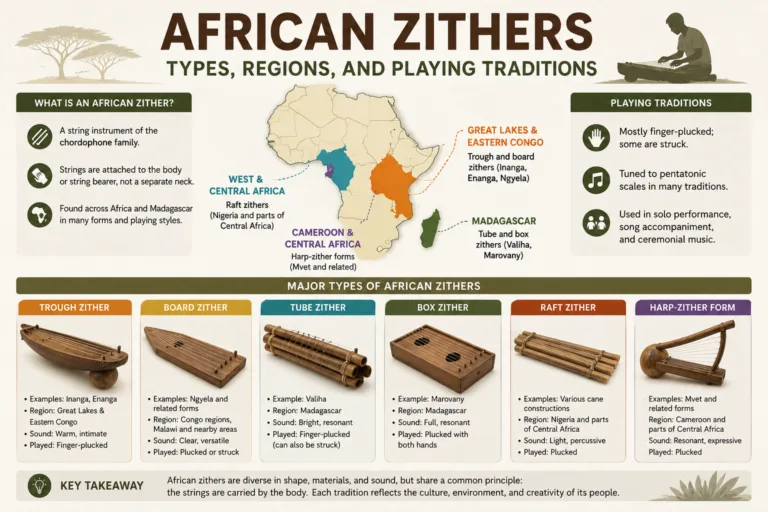
    African zithers do not belong to one construction tradition or one musical style. Across the continent and Madagascar, documented instruments include shallow wooden trough zithers, flat board zithers, bamboo tube zithers, cane raft zithers, box forms, and instruments that sit near the boundary between zithers and harps. What connects them is not a shared sound,…

  • Inanga: The East African Trough Zither Explained

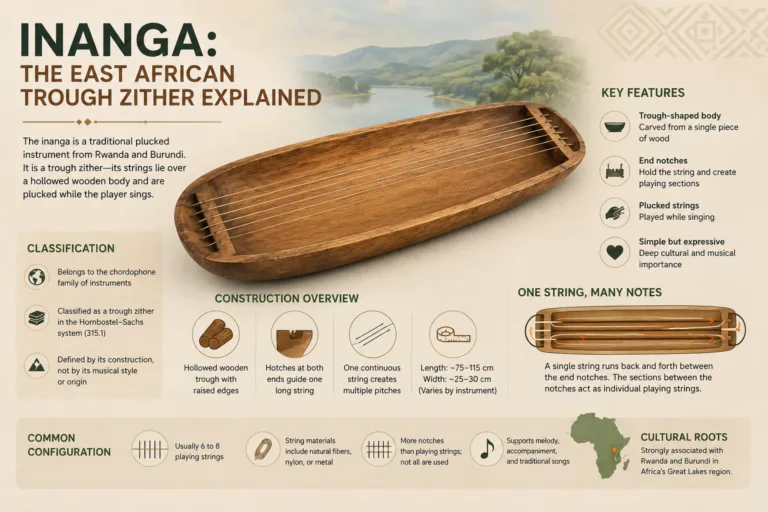
    The inanga is a plucked trough zither[1] associated especially with Rwanda and Burundi in Africa’s Great Lakes region. Its strings do not run along a neck, and they are not arranged like those of a European concert zither. Instead, a hollowed wooden body forms a broad, shallow trough, while a long string passes back and…

  • Valiha: The Bamboo Tube Zither of Madagascar

    The valiha is a Malagasy tube zither[1] whose classic form turns a single bamboo cylinder into the body of a complete string instrument. In older idiochord[2] examples, narrow strips are cut from the outer skin of the bamboo, left attached at both ends, and lifted above the surface on small bridges[3]. Other valihas use separately…