Zither Parts And Construction

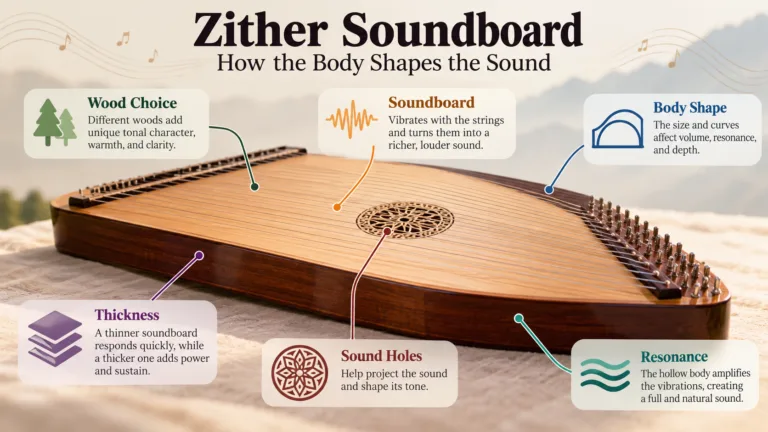
  • Zither Soundboard: How the Body Shapes the Sound

    A plucked zither string produces only a modest amount of audible sound by itself. The fuller voice comes when string motion reaches a larger vibrating structure: the soundboard[1] or, in some zither forms, another part of the body that serves the same acoustic job. That surface bends, excites the surrounding air, interacts with the rest…
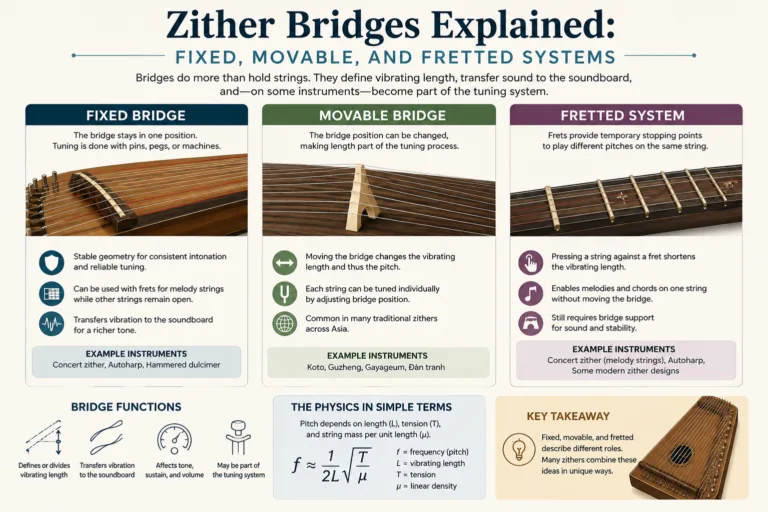
  • Zither Bridges Explained: Fixed, Movable, and Fretted Systems

    A zither bridge does more than hold strings above the body. It helps define the speaking length[1] of a string, transfers vibration toward the soundboard, and, on some instruments, becomes part of the tuning system itself. The terms fixed bridge, movable bridge, and fretted are often grouped together, but they do not describe three equivalent…

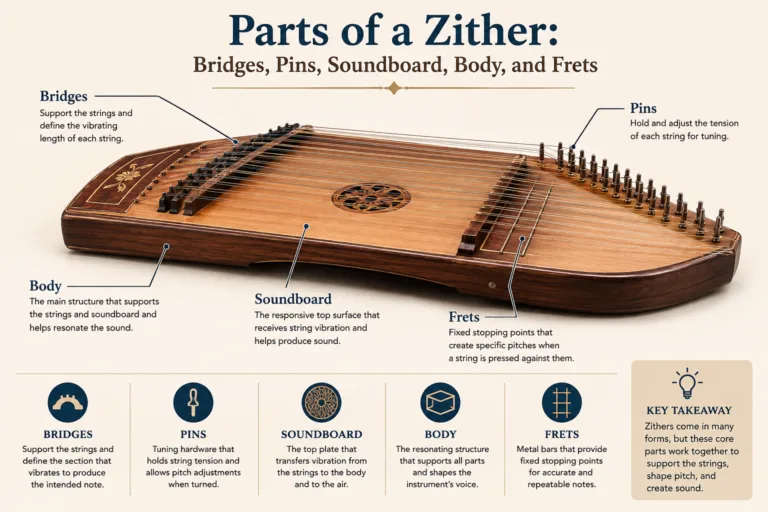
  • Parts of a Zither: Bridges, Pins, Soundboard, Body, and Frets

    A zither does not have one universal anatomy. In the narrow European sense, the word often points to the concert zither; in broader organology[1], it covers a much wider branch of chordophones[2] whose strings are carried by the instrument body rather than by a separate neck in the manner of a guitar or violin. That…